
Imagine being able to make a bet on any topic at any time with anyone else. That is sell of the prediction markets in a nutshell, an industry that pairs betting with social and news, and one that has grown to trade multiple billions in monthly volume today.
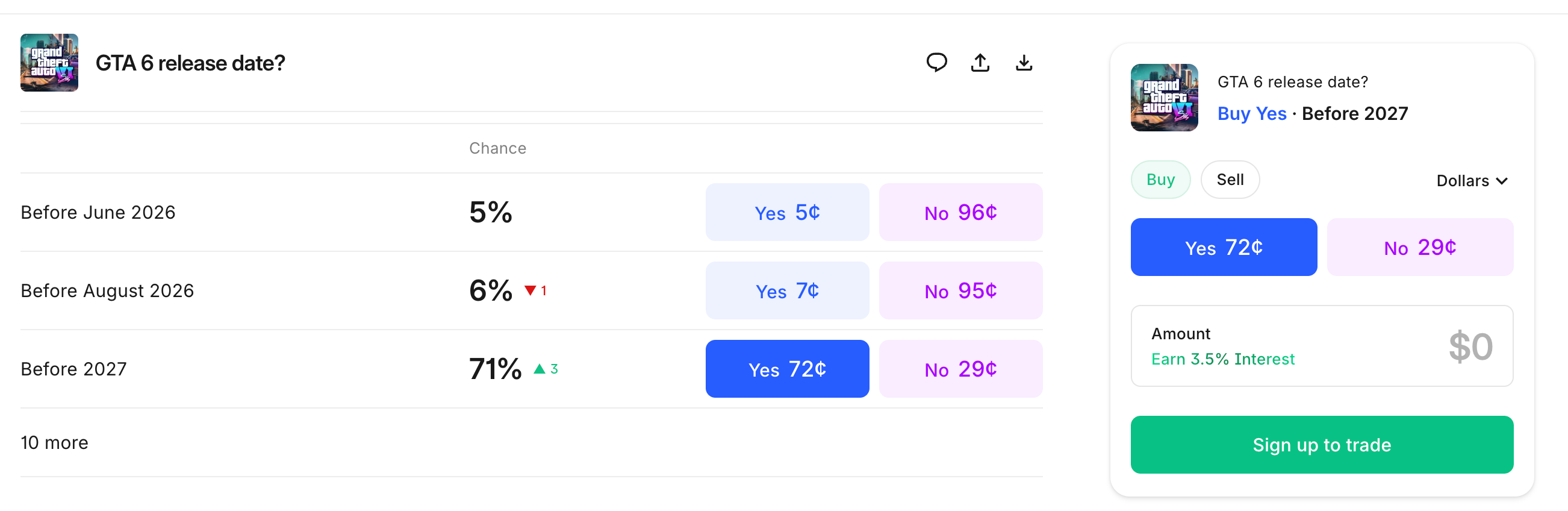
Prediction markets today is a duopoly led by the two biggest market makers Kalshi and Polymarket, both of which has seen explosive growth. This past week, Kalshi closed a series E that values the company at an $11 billion valuation, more than double of its last valuation just months ago. At the same time, Polymarket is also seeking a $15 billion valuation after being usurped by Kalshi as the #1 player by trading volume.
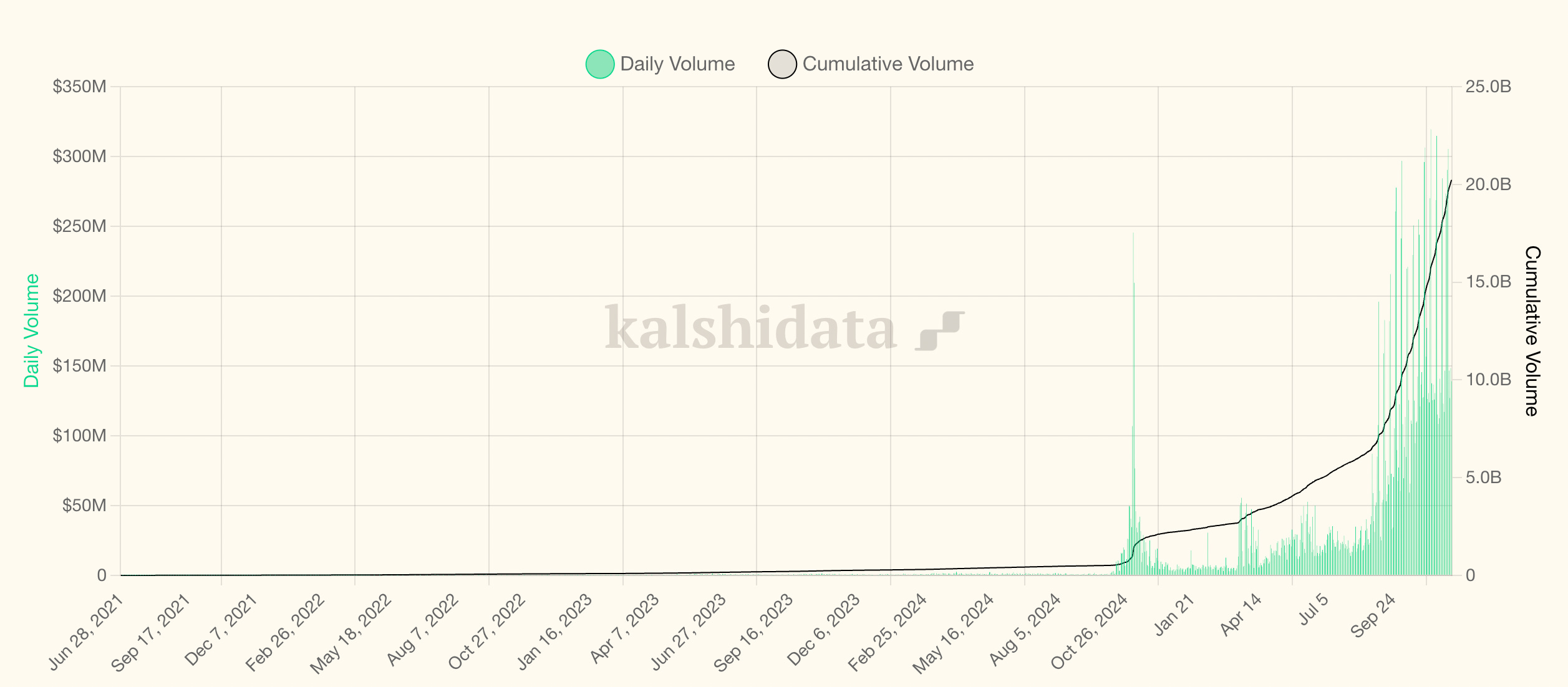
The U.S. presidential election last year was the catalyst that triggered the industry’s hypergrowth. Crowd-sourced, real-time predictions offered more engaging and often more accurate signals than traditional polling data which were outdated. Since then, prediction markets have expanded to cover a wide range of topics, from sports to culture to global news, becoming an increasingly mainstream form of betting. With sports in particular, prediction markets present a direct competitor, and often a more engaging alternative, to traditional betting from operators like DraftKings.
By charging a variable fee of 1-2%, prediction market operators function essentially as brokerages, where trading volume is the primary driver of revenue. It is no surprise, then, that competition is emerging from platforms that already own distribution and user bases. Robinhood, who to-date had partnered with Kalshi to offer prediction markets on it’s brokerage app, announced a joint venture last week to build it’s own exchange for it’s fastest-growing product line. Meanwhile, crypto exchanges like Coinbase and Crypto.com have also begun offering variations of prediction markets on their apps.
From hereon, it’s a race to the finish line on growing user acquisition and trading volume by building new markets and tapping on channel distribution. Kalshi for example, recently signed a deal with CNBC to be its exclusive predition-market operator showing real-time probability data onto the network’s platforms. This comes days after a similar deal with CNN, underscoring the company’s media distribution strategy.
The industry is not without its flaws, most notably it has limited ability to prevent insider trading. Take this example of a user earning nearly $1 million from correctly predicting nearly every outcome of Google Search trend markets. Or the time where Coinbase CEO Brian Armstrong trolled markets by rattling off 5 words during the company’s earnings call, illustrating the ease and dangers of manipulation.
I personally believe that this represents the future of consumer betting and polling. Even in it’s current form, the industry is still very young and has much more room to grow, especially in the SEA region where prediction markets have yet to truly break into the mainstream.
-
This week…
🇯🇵: BOJ is expected to raise interest rates in Dec to 0.75%, but with markets already pricing in an 80% chance of a hike, this is unlikely to trigger another round of Yen carry trade.
📺: Netflix acquires Warner Bros. for $82 billion, the expected to close in 12-18 months.
👾: Meta is reportedly reducing its Metaverse spending by up to 30%, lifting its stock as it continues to rebound from the Q3 earnings dip.
🤖: NYT sues Perplexity for copying and distributing its articles without permission, as publishers continue to battle against tech companies.
🇨🇳: Share of China’s “NVIDIA”, Moore Thread, surges over 400% on it’s IPO debut as the Chinese government continues to push domestic GPU makers.